Medical emergencies can happen anywhere and at any time. A family member may suddenly collapse at home, a colleague may experience a cardiac arrest at work, or someone may start choking while eating. Actions taken within the first few minutes can make a significant difference in these kinds of critical situations.
In Nepal, where emergency medical services may not always arrive immediately, having trained individuals nearby can help save lives. Learning basic life support skills gives you the confidence and knowledge to respond quickly while waiting for professional medical assistance.
Whether you are an employee, business owner, teacher, healthcare worker, or simply someone who wants to be prepared for emergencies, getting BLS training in Nepal is a valuable investment in safety and preparedness. In this article, we will explore the critical importance of BLS training for workplaces.
What is Basic Life Support Training?
Basic life support (BLS) training is a comprehensive course designed to teach individuals how to recognize and respond to life-threatening conditions such as cardiac arrest, breathing difficulties, or choking. The primary objective of BLS training is to preserve life by maintaining blood circulation and oxygen flow to vital organs until advanced medical care arrives.
A typical BLS training teaches participants how to:
- Recognize medical emergencies
- Perform high-quality CPR (Cardiopulmonary Resuscitation)
- Assist choking victims
- Check responsiveness and breathing
- Use an external defibrillator (AED)
- Communicate effectively with emergency responders
- Follow the chain of survival during emergencies
While Basic life support is often associated with healthcare professionals, it is equally valuable for everyone, be it office workers, teachers, security personnel, factory employees, construction workers, hospitality staff, or any normal individual.
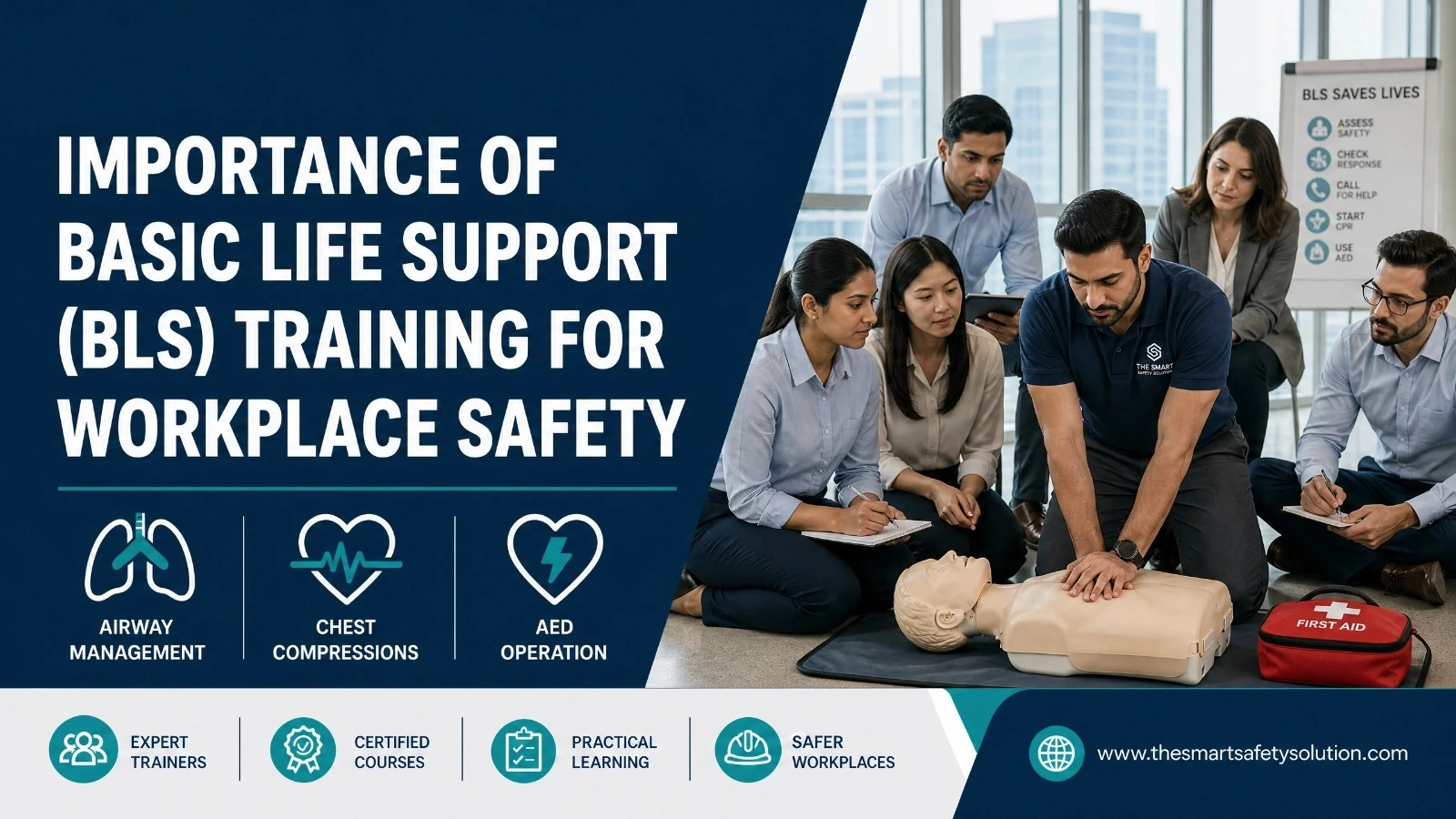
Why is Basic Life Support Training Important for Workplaces?
Providing employees with BLS and first aid training is not just a regulatory requirement in many places, but a crucial investment in safety and well-being.
1. Immediate Response During Emergencies
When a person suffers a cardiac arrest or stops breathing, every second matters. BLS training equips employees with the knowledge and skills to act immediately. Employees trained in CPR and BLS can significantly increase the chances of survival for the affected person before professional medical help arrives.
2. Creates a Safer Workplace
BLS training is an important component of a workplace safety program. It prepares employees to respond to incidents involving coworkers, customers, or visitors. Employees know how to react calmly and appropriately during critical situations.
3. Increases Employee Confidence
People often panic when faced with a medical emergency. Comprehensive basic life support BLS training fosters confidence in employees by providing practical knowledge and hands-on experience, helping employees respond confidently instead of freezing under pressure.
4. Supports Workplace Health and Safety Goals
An organization that prioritizes BLS training demonstrates a strong commitment to the safety and well-being of its workforce. This investment fosters a proactive safety culture where employees feel valued and secure.
5. Reduced Liability
Equipping employees with basic life support BLS skills can prevent a condition from worsening. Prompt CPR, airway management, or choking relief can significantly improve outcomes before professional treatment becomes available. This proactive measure not only protects human lives but also reduces the company’s liability in the event of an emergency.
6. Compliance with Regulations and Standards
Many industries like healthcare, construction, aviation, are subject to specific health and safety regulations that require employees to complete first aid and Basic Life Support (BLS) training. By providing this training, organizations ensure compliance with these legal requirements, reducing the risk of penalties or even legal actions.
7. Enhances Professional Development
Employees with BLS certification gain valuable life skills that can benefit both their personal and professional lives. Many employers consider first aid and BLS knowledge a valuable additional qualification.
How to Implement BLS Training in Your Business?
Introducing BLS training in your workplace does not have to be complicated. With proper planning, businesses of all sizes can create a safer environment for employees and visitors.
1. Assess Workplace Risks
Conduct a thorough assessment and identify potential health and safety risks specific to your industry. Construction sites, manufacturing facilities, schools, financial institutions, and offices may face different emergency situations that require tailored training.
2. Choose a Trusted Training Provider
Partner with a reliable and experienced emergency safety training provider. For businesses operating in Nepal, considering local experts such as Smart Safety Solution (3S) can be beneficial. They specialize in Basic Life Support (BLS), First Aid, and Occupational Health & Safety training, ensuring the content is relevant to the local context and regulations.
3. Conduct Regular Refresher Courses
BLS training should not be a one-time event but an ongoing component of your employee development program. Integrate regular training sessions and refresher courses, ideally annually, to ensure that skills remain sharp and up-to-date.
4. Emphasize Hands-On Practice
Effective learning in BLS training heavily relies on practical application. Ensure that the chosen program includes ample opportunities for employees to engage in hands-on practice. allowing employees to perform these life-saving techniques effectively in a real emergency.
5. Train Employees Across Departments
Do not limit training to management or safety officers. Having trained personnel across multiple departments increases the likelihood that someone can respond quickly during an emergency.
6. Create an Emergency Response Plan
Develop clear emergency procedures and ensure employees understand their roles during medical emergencies. Training is most effective when supported by a well-defined response plan.
7. Maintain Emergency Equipment
Ensure first aid kits, emergency contact lists, and automated external defibrillators (AEDs), if available, are easily accessible and regularly inspected. Employees should also be familiar with their locations and usage.
8. Promote a Safety-First Culture
Encourage continuous awareness of workplace safety through regular discussions, drills, and training sessions. Building a safety-first culture ensures that preparedness becomes part of everyday operations, not just a periodic exercise.
Common Situations Where BLS Skills Are Needed
Many people assume medical emergencies only happen in hospitals. In reality, emergencies can occur anywhere, including homes, offices, schools, public spaces, and workplaces. BLS skills help individuals respond effectively during these critical situations.
Common situations where BLS skills may be required include:
- Cardiac arrest
- Heart attack emergencies
- Choking incidents
- Sudden collapse or unconsciousness
- Breathing difficulties
- Near-drowning accidents
- Electrical injuries
- Workplace accidents
- Sports-related emergencies
- Severe allergic reactions
- Construction site incidents
- Medical emergencies involving elderly individuals
- School or classroom emergencies
- Public gathering incidents
- Road traffic accidents
In many of these situations, immediate intervention through CPR, airway management, or AED use can help maintain vital functions until professional healthcare providers arrive.
Final Thoughts
Learning basic life support BLS is more than just acquiring another skill or certification. It is learning a skill that can save a life. Emergencies often occur without warning, and the first few minutes are usually the most critical. Knowing how to perform CPR or assist a choking victim can make a life-changing difference.
For businesses in Nepal, investing in bls training helps create a safer workplace, improves emergency preparedness, and demonstrates a commitment to employee wellbeing.
Whether you are a business owner looking to improve workplace safety or an individual wanting to be prepared for emergencies, enrolling in a professional bls course is a step that can have a lasting impact. Get hands-on BLS training with Smart Safety Solution and equip your team with the skills to respond when it matters most.
Frequently Asked Questions (FAQs)
The five key elements of Basic Life Support (BLS) include:
- Recognizing an emergency and assessing the scene for safety.
- Checking responsiveness and breathing of the victim.
- Activating emergency medical services (EMS) and calling for help.
- Performing high-quality CPR (Cardiopulmonary Resuscitation) to maintain blood circulation and oxygen delivery.
- Using an Automated External Defibrillator (AED) as soon as it becomes available.
The primary purpose of Basic Life Support (BLS) is to preserve life by maintaining circulation and breathing until professional medical assistance arrives. BLS helps prevent further injury, improves survival rates during emergencies such as cardiac arrest and choking, and provides critical support during the first few minutes of a medical crisis.
BLS training is beneficial for everyone, including healthcare professionals, teachers, office employees, construction workers, security personnel, hospitality staff, parents, caregivers, and community members. Anyone can encounter a medical emergency and benefit from knowing how to respond effectively.
Most BLS certifications are valid for two years. However, regular refresher training is recommended to maintain confidence and ensure skills remain current with the latest guidelines.
Most BLS courses can be completed within 4 to 8 hours, depending on the training provider and course format. Some providers also offer blended learning options that combine online learning with practical sessions.